
When teeth are affected by cavities or fractured from chewing, dental restoration is necessary to repair the damage.
As dentists in Quito, Ecuador, we specialize in a range of techniques and materials to restore damaged teeth, recovering both their function and aesthetics.
The optimal dental restoration technique and material are chosen based on the specific damage. Therefore, an individualized evaluation at our Quito Dental Care Center is essential to determine the best solution for each patient.
Want to know how to get your smile back? In this article, we explain the dental restoration process and the different treatment options available.

Table of Content
What is a dental restoration?
Restoration, also known as oral rehabilitation, is the repair of a tooth’s surface that has been affected from its original shape or size, primarily due to decay or wear caused by excessive chewing forces.
It also includes the recovery of the tissues that support the teeth, which is the focus of periodontics, a separate branch of dentistry.
Additionally, it includes replacing lost teeth through dental prostheses or dentures, either in a partial or complete manner.
When is a dental restoration required?
The most common cases include:
- Tooth decay (cavities): When bacteria break down tooth enamel, cavities form. If left untreated, they can grow, causing pain, infection, and even tooth loss. Dental fillings are used to restore teeth with cavities.
- Cracked or chipped teeth: Teeth can crack or chip due to injury, trauma, or even excessive grinding (bruxism). These cracks can weaken the tooth, making it more susceptible to further damage or decay. Dental crowns or fillings can be used to repair cracked or chipped teeth.
- Missing teeth: Missing teeth can occur due to injury, extraction, or severe decay. This can lead to problems with biting, chewing, and speech. Dental implants, bridges, or dentures can be used to replace missing teeth.
- Worn-down teeth: Over time, teeth can become worn down from years of use. This can make them more sensitive and prone to breakage. Dental crowns or veneers can be used to restore worn-down teeth.
How is a tooth restored or repaired?
These are the general steps in dental restoration:
- Examination and Diagnosis:
- Comprehensive Oral Exam: The dentist will conduct a thorough examination of your teeth, gums, and bite. This may include taking X-rays to assess the extent of the damage.
- Diagnosis: Based on the examination, the dentist will diagnose the specific dental problem and discuss the available treatment options with you.
- Treatment Planning:
- Treatment Goals: The dentist will work with you to determine your treatment goals and expectations.
- Treatment Plan: A personalized treatment plan will be created, outlining the specific procedures, materials, and timeline for your dental restoration.
- Treatment Preparation (if necessary):
- Anesthesia: Local anesthesia may be administered to numb the treatment area.
- Isolation: The tooth may be isolated with a rubber dam to keep it dry and free of saliva during the procedure.
- Restoration Procedure:
- Removal of Decay (if applicable): Any decayed or damaged tooth structure will be carefully removed using dental instruments.
- Tooth Preparation (if necessary): The tooth may need to be reshaped or prepared to receive the chosen restoration (e.g., crown, filling). Sometimes special techiques as Deep Margin Elevation or Surgical Crown Lenghtening are needed.
- Placement of Restoration: The chosen restoration material (e.g., composite resin, porcelain, gold) will be carefully placed and shaped to match the surrounding teeth.
- Bonding/Curing: The restoration will be bonded to the tooth using a special adhesive and cured with a light source.
- Finishing and Polishing:
- Refinement: The restoration will be carefully refined and polished to achieve a smooth, natural appearance.
- Bite Adjustment (if necessary): The bite will be checked and adjusted to ensure proper function and comfort.
- Post-Treatment Care:
- Aftercare Instructions: The dentist will provide you with specific aftercare instructions, which may include:
- Proper oral hygiene practices
- Dietary restrictions
- Pain management
- Follow-up appointments
- Aftercare Instructions: The dentist will provide you with specific aftercare instructions, which may include:
Our Ultra-Conservative Philosophy
At the Asiri Dental Center, we understand that your comfort and minimal discomfort during your visit are crucial for your satisfaction.
For this reason, we don’t hold back on technology, materials, instruments, equipment, time, and kindness in our dental techniques, ensuring your dental restoration is comfortable, effective, and durable.
We focus on maximum comfort for our patients because we use the turbine (drill) to the minimum and only remove cavities without touching healthy tissue.
Dr. Krisna Casal
Benefits of a Good Dental Restoration
- Improved Oral Health:
- Prevent further decay: Restorations like fillings stop the spread of cavities, protecting the tooth from further damage.
- Reduce risk of infection: By addressing decay and damage, restorations help prevent infections that can spread to other areas of the mouth.
- Preserve natural tooth structure: In many cases, restorations allow you to preserve more of your natural tooth structure compared to extraction.
- Enhanced Function:
- Improved chewing and biting: Restorations help restore the natural function of your teeth, allowing you to eat and speak comfortably.
- Prevent misalignment: Replacing missing teeth helps maintain proper bite alignment, which is crucial for overall oral health.
- Improved Aesthetics:
- Enhanced smile: Restorations can significantly improve the appearance of your smile by repairing chips, cracks, and discolorations.
- Boost self-confidence: A healthy and attractive smile can boost your self-esteem and confidence.
- Pain Relief:
- Eliminate tooth sensitivity: Restorations can eliminate pain and sensitivity caused by cavities, cracks, or worn-down teeth.
- Reduce discomfort: By addressing the underlying cause of discomfort, restorations can significantly improve your overall comfort.
- Long-lasting Results:
- Durable materials: Modern dental materials are designed to be durable and long-lasting, providing years of service.
- Improved quality of life: With proper care, dental restorations can significantly improve your overall quality of life by restoring your oral health and function.
Please Note: The specific benefits of dental restoration will vary depending on the type of restoration and the individual patient’s needs.
Types of Dental Restorations by Technique
Direct Dental Restorations
The dental restorative material is placed and molded directly on the tooth by the dentist during a single visit to the dental office.
Indirect Dental Restorations
The restorative material is custom-made in a dental laboratory based on impressions previously taken at our office.
This material is then installed on the tooth using special adhesives that allow for a better seal of the restoration.
Main Dental Restorations
Fillings
Direct restorations made with composite resin, fillings are the most common type. You can find more details in our article dedicated to Fillings with Composite Resins.
| You may be interested in: Dental Fillings |
Build-ups
Large dental build-ups are composite resin fillings of a significant size, which normally serve as the foundation for a subsequent indirect restoration.
Inlays: Inlay, Onlay, Overlay, and Tabletops
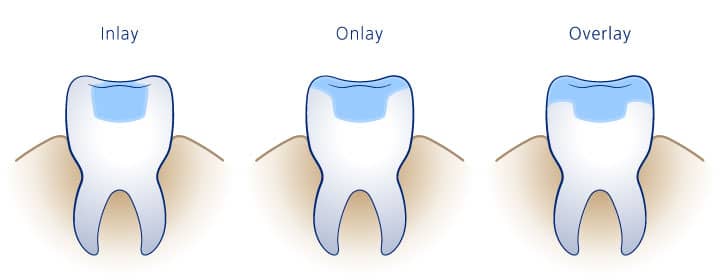
Dental onlays are indirect restorations using materials that are more resistant than composite resin. Because they are indirect, they offer a better seal and superior aesthetics.
They are an excellent option due to their conservative philosophy, which allows for keeping the tooth as natural and safe as possible.
You can read more details in our article dedicated to dental inlays, onlays, and tabletops.
Dental Veneers
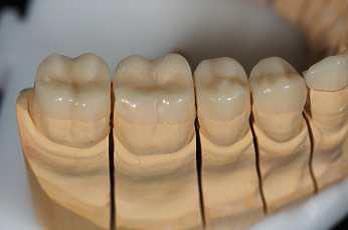
Dental veneers are restorations applied to the external surfaces of the anterior teeth. Veneers are the most relevant procedure used in Smile Design treatments.
Dental Crowns
Dental Crowns are indirect restorations (overlays) that cover the entire tooth surface. They can be Traditional Post-and-Core Crown, endocrown or implant crowns.
Dental Restoration Materials
As dental material technology advances, many of these have been used to achieve increasingly better restorations in terms of safety and aesthetics.
The main materials for dental restorations include:
- Composite resins.
- Glass ionomer.
- Ceramics.
- Zirconium or Zirconia.
- Ceromer.
Conclusions
An excellent dental restoration is the product of a dentist’s experience coupled with current dental technology.
Adhesive technologies are gaining ground and today they are a great option to prevent leaks and maintain tooth function by being less invasive.
Author

Our Foundress and guardian of our Values
Dr. Krisna makes sure that the treatment you receive is successful by contrasting opinions between all the doctors that are necessary and ensuring a neat execution of all the processes.
More about Dr. Krisna Casal