Have you ever hesitated to smile for a photo because you feel your teeth aren’t as bright as you’d like? In Centro Odontológico Asiri, we completely understand that feeling. A bright smile isn’t just vanity; it’s a calling card that communicates health and confidence. This treatment is ideal for any adult wishing to improve the aesthetics of their smile, from business executives and digital nomads to tourists visiting our beautiful Ecuador.
In the world of cosmetic dentistry, teeth whitening is one of the most requested procedures due to its ability to transform the face quickly and conservatively. However, there is a lot of misinformation about how it works and whether it is safe.
In this article, we will provide a complete explanation of teeth whitening, including why it is crucial to do it under professional supervision, the step-by-step procedure, and vital suggestions if you are new to this treatment. Our goal is for you to feel safe, informed, and ready to smile without fear.
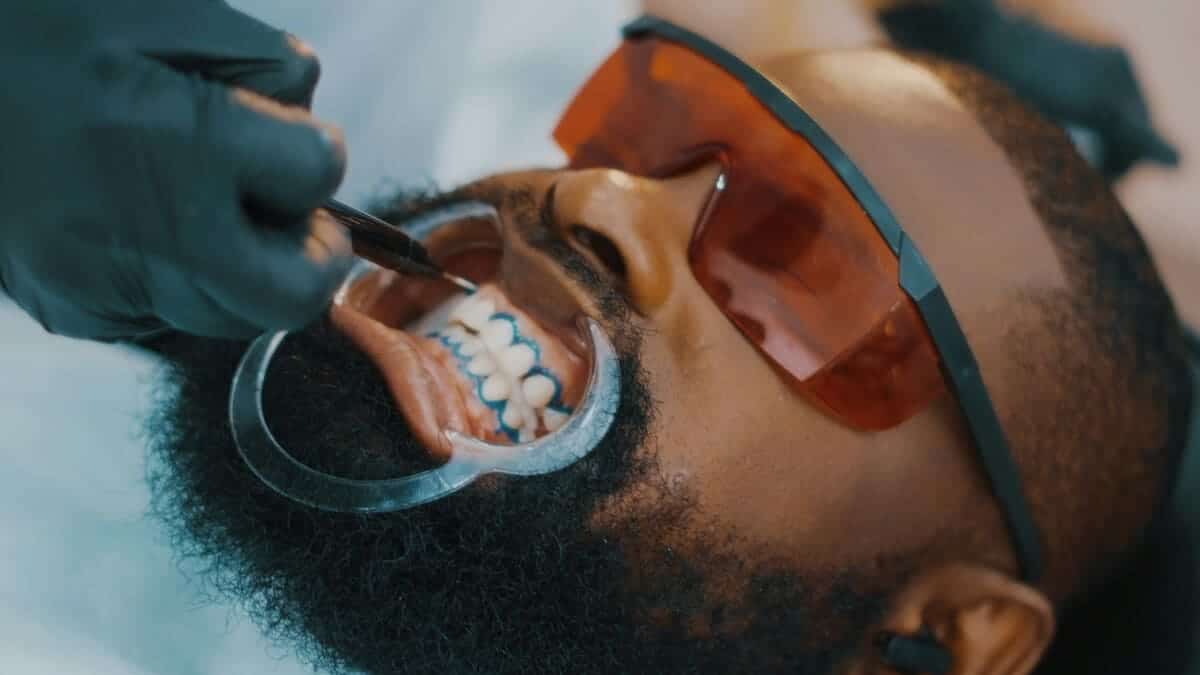
Table of Content
Key Takeaways
- Professional Safety: Performing whitening under the supervision of a dentist ensures your enamel remains intact and minimizes sensitivity, unlike unregulated at-home kits.
- Immediate Results: It is one of the few aesthetic treatments that offers a visible and drastic change in a single session or a few weeks, instantly boosting your self-esteem.
- Personalized Diagnosis: Not all stains are the same; at Asiri, we evaluate the origin of the discoloration to ensure that whitening is the effective treatment for you.
What is tooth whitening?
It is a cosmetic procedure used to lighten the color of teeth and remove stains and discolorations.
It is an effective way to improve the appearance of your smile and get whiter, brighter teeth.
There are different teeth whitening methods available, from over-the-counter options to professional treatments performed by dentists.
Most treatments use chemicals such as hydrogen peroxide or carbamide peroxide 1 to penetrate tooth enamel and break down stains.
It is important to note that this treatment can only lighten the color of your natural teeth. It has no effect on dental fillings, crowns or veneers. If you have visible dental restorations in your smile, you may want to ask your dentist about other options for a whiter, more uniform smile.
Benefits of teeth whitening
This treatment offers a series of benefits, both aesthetic and for oral health. Below are some of the main benefits of this procedure:
- Prettier teeth: Whiter teeth are undoubtedly an aesthetic aspect without comparison. A bright white smile can make you feel more attractive and confident.
- Increases confidence: Having a radiant smile can improve your self-confidence and how you present yourself to others. When you feel good about your smile, you are more likely to feel confident and comfortable in social and professional situations.
- Increases confidence and quality of life 2: Having a radiant smile can improve your self-confidence and how you present yourself to others. When you feel good about your smile, you are more likely to feel confident and comfortable in social and professional situations.
- Reduces the risk of dental disease: Teeth lightening involves removing stains and plaque on the teeth, which helps reduce the risk of tooth decay and gum disease. By maintaining good oral hygiene and removing stains, you can maintain an overall healthier smile.
- Fast, long-lasting results: Unlike other dental treatments that can take time to see results, this treatment can offer fast, long-lasting results. In just one or two sessions, you can notice a significant difference in the color of your teeth.
- Non-invasive procedure: it is a procedure that does not require anesthesia or surgery. In most cases, treatment is performed in the dental office or in the comfort of your home with over-the-counter products.
- Elimination or reduction of common stains: during this process, stains caused by common agents can be eliminated or greatly reduced.
- More youthful appearance: As we advance in age, our teeth become more yellowish. This treatment can help remove stains and discolorations, returning your teeth to a more youthful and healthy appearance.
- Better appearance of hygiene: Stains or dark color of teeth can give the appearance of poor dental hygiene. This appearance is reversed using these teeth whitening tecniques.
- Conservative Treatment: Unlike veneers, we do not need to wear down your natural tooth structure.
- Positive First Impression: A well-cared-for smile opens doors in both professional and social life.
- Customization: We can adjust the intensity of the whitening according to your desires and tooth sensitivity.
Myths and realities about teeth whitening
This treatment is a topic that is often surrounded by myths and misinformation. Below, some of the most common myths will be debunked:
- It damages tooth enamel: This is false. If done correctly and as directed by a dentist, teeth whitening will not damage tooth enamel. The products used are designed to be safe and effective 3.
- It is painful: Some people may experience temporary tooth sensitivity during or after teeth whitening, but this is usually mild and goes away over time. If you experience prolonged or intense sensitivity, it is important to tell your dentist.
- It is permanent: Whitening is not permanent, but the results can last a long time if you maintain good oral hygiene and avoid factors that cause stains, such as smoking or consuming pigmented foods and drinks.
- All teeth can be whitened equally: This is not completely true. Teeth whitening can have different results for each person and depends on the cause of the tooth discoloration. Some stains may be more difficult to remove than others.
It is important to obtain accurate and reliable information before deciding to undergo this procedure. Your dentist will be the best source of information and will be able to answer all your questions and concerns.
Causes of tooth discoloration
- Age: As we age our teeth become darker
- Coloring agent: foods or drinks such as coffee, wine or soda could stain your teeth. Likewise, cigarettes or similar products
- Trauma: Sometimes, dental trauma damages the pulp of the teeth and generates stains inside.
How to Whiten Teeth
There are different techniques to whiten teeth, including:
- At Home teeth whitening: normally performed by applying a low-concentration whitening material that can be applied at home with the use of trays that keep it in contact with the teeth. Its application can be carried out for several days.
- Professional teeth whitening: it is performed in the dental clinic by a dentist and usually in a single appointment. The material used is of very high concentration that is applied once or several times depending on the case.
- Internal tooth whitening: It applies when a tooth is stained inside, usually due to a blow or endodontic treatment. In this case, the whitening material is applied to an internal cavity of the tooth and left there for a few days.
- Over-the-counter teeth whitening: There are numerous products available on the market without the need for a prescription. These products typically include whitening strips, gels, and whitening toothpastes. While they may be less expensive than other methods, it is important to note that results may vary and are not always as effective as treatments performed by professionals.
It is important to speak with your dentist before beginning any type of treatment or procedure to determine which option is right for you and your specific needs.
Is teeth whitening safe?
It is generally safe when done correctly and under the supervision of a dentist 4 . However, like any dental procedure, there are some risks and considerations to keep in mind.
You may experience temporary tooth sensitivity during or after the treatment. This is usually normal and will disappear over time. If the sensitivity persists or is intense, it is important to notify your dentist.
Additionally,it should only be performed on healthy teeth and gums. If you have untreated cavities, gum disease, or other dental problems, it is important to treat them before.
If you decide to opt for professional teeth whitening, it is important to choose a dentist who is qualified and experienced in these types of procedures. Your dentist will be able to evaluate your oral health, determine if you are a good candidate, and apply the treatment safely and effectively.
Who are good candidates for teeth whitening?
- Teeth whitening can be a suitable option for most people who want to improve the appearance of their teeth and achieve a whiter smile. However, not everyone is a good candidate for this procedure.
It is important to talk to your dentist before undergoing teeth whitening to determine if you are a good candidate. Some factors that may influence your eligibility include:
- Healthy teeth and gums: it should only be performed on healthy teeth and gums. If you have untreated cavities, gum disease, or other dental problems, it is important to treat them before considering teeth whitening.
- Natural teeth: Teeth whitening can only lighten the color of natural teeth. If you have dental fillings, crowns, or veneers on your visible smile, you may want to consider other options to get a whiter, more uniform smile.
- Realistic expectations: It is important to have realistic expectations about the results of teeth whitening. This procedure can significantly improve the color of your teeth, but it cannot always achieve perfect white or remove all stains.
- Your dentist will be able to evaluate your oral health, discuss your goals and expectations, and determine if teeth whitening is the right option for you.
Preparation for teeth whitening
The ideal thing before any dental lightening procedure is to perform teeth cleaning with polishing to remove calculus and stains and thus prepare the surface of the teeth to receive the whitening agent so that it can better exert its effect.
It is also advisable to carry out a whitening prior to any necessary dental restoration treatment such as fillers, inlays, veneers, dentures. This is with the aim that when these are going to be made, your teeth already have the desired color and only then, these restorations can be made using a material of a matching color.
Professional teeth whitening procedure
- Dental cleaning: to prepare your teeth for the procedure.
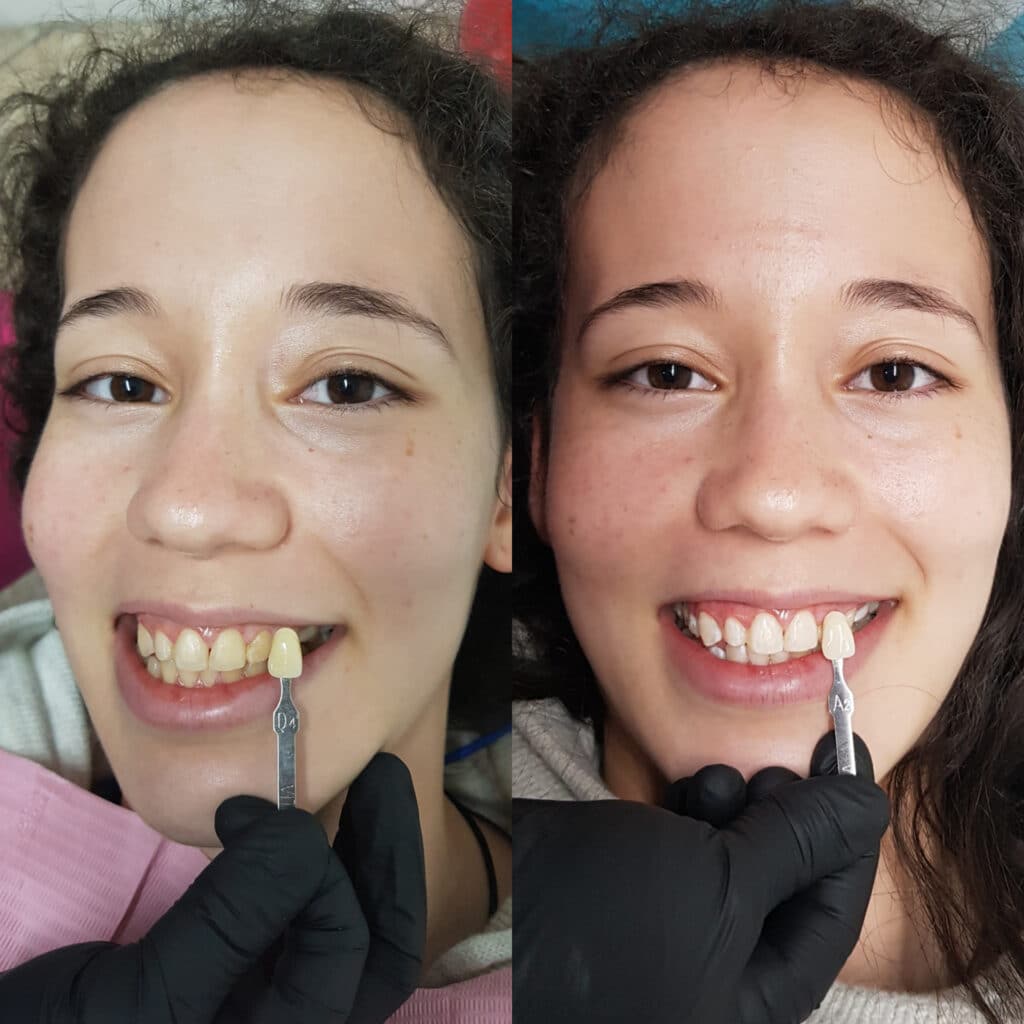
- Current shade measurement: The current color of your teeth is determined using a standard shade guide.
- Lip separator: your lips are separated to protect them from accidental contact with the material that is very abrasive on the mucous membranes.
- Gingival barrier: like the lips, your gums are protected by applying a layer of a material that obstructs the passage of the whitening material to them.
- Application of the whitening material: the material is applied to the surface of your anterior or front teeth, usually from premolar to premolar.
- Wait for the material to take effect: wait around 20 minutes with the material on your teeth. At this point, some professionals use ultraviolet light but studies have shown that it has no effect.
- Apply material again: if necessary, and if the dentist considers it appropriate, material can be applied again.
- Material removal: The dentist carefully cleans your teeth and removes all the whitening material as well as the gingival barrier and lip separator.
- Measurement of the new color: with the same guide, the new color is determined and the result of the treatment is recorded.
Efficacy and Safety of UV Light
Light-activated teeth whitening (including UV and LED) is designed to catalyze the oxidation of hydrogen peroxide (H2O2), theoretically accelerating the breakdown of stains through the release of free radicals. Despite commercial claims of superior results, multiple meta-analyses show no significant difference in long-term color change when high professional gel concentrations (25-35%) are used with or without light activation 5 6.
Current evidence does not confirm the clinical necessity of light activation for high-concentration gels. The most promising emerging approach is the violet LED-assisted activation of low-concentration peroxide or photocatalytic systems and photobiomodulation (PMB) for modulating tooth sensitivity. 7
Conversely, the use of light activation significantly increases the risk and intensity of post-treatment tooth sensitivity, with patients being up to 3.5 times more likely to experience discomfort. Furthermore, much of the immediate “brilliant white” effect is an optical illusion caused by temporary tooth dehydration; this effect typically reverses within 24 to 48 hours as the teeth rehydrate (rebound effect) 8. Due to additional risks such as soft tissue burns and potential pulpal damage from heat, modern dentistry is shifting away from UV light toward safer, cooler technologies like violet LED.
Teeth Whitening Before and After
Original photos before and after teeth whitening WITHOUT PHOTOSHOP
Care after teeth whitening
After whitening, you will feel temporary sensitivity in your teeth that may appear like “rushes.” This is due to the action of the whitening material.
This sensitivity can be spontaneous, that is, happen suddenly; or it can appear with changes in temperature, mainly cold.
Normally, this sensitivity is at a tolerable level in 31% to 51% of cases and is present in 70% to 100% of cases performed in the office. For this reason, hypersensitivity is a completely expected condition. 9
It is also advised, although it has not yet been proven, to avoid consuming foods or drinks with coloring in the days following tooth whitening.
It is possible that over time, your teeth will darken again, so it is recommended that you visit your dentist periodically, both for monitoring and for possible new whitening.
Risks and Potential Complications
- Transient Tooth Sensitivity: It is possible to feel a temporary increase in sensitivity to cold or heat, which usually disappears within 48 hours.
- Gingival Irritation: If the gel touches the gum, it can cause a mild white burn or irritation, which is why professional protection is key.
- Uneven Results: If you have restorations (resins or crowns) on your front teeth, these will not whiten, which might require changing them afterward.
Alternatives to teeth whitening
If you are not a good candidate for teeth whitening or would prefer to explore other options, there are some alternatives to get a whiter smile. Below are some alternatives to consider:
- Dental Veneers: Dental veneers are thin sheets made of porcelain or composite resin that are bonded to the front of the teeth to improve their appearance. Dental veneers can cover stains, discolorations, and other dental defects, providing a white, uniform smile.
- Dental Crowns: Dental crowns are protective coverings that are placed over damaged or discolored teeth to improve their appearance and strength. Dental crowns may be a suitable option if you have severely discolored or damaged teeth.
- Enamel Microabrasion: A mechanical procedure to remove very superficial stains or enamel defects.
- Dental Restorative Treatments: If you have stained or discolored teeth due to cavities or damage, you may need oral rehabilitation treatments, such as fillings or root canals. These treatments can help improve the appearance of your teeth and restore their function and health.
It is important to speak with your dentist to determine what is the best alternative for you and your specific needs. Your dentist will be able to evaluate your oral health and provide you with personalized recommendations to obtain a whiter, more attractive smile.
Frequently Asked Questions (FAQ)
Does teeth whitening hurt?
At Asiri, we follow the philosophy that pain is not an option
. There may be some sensitivity, but we use desensitizing gels and careful techniques to minimize any discomfortHow long do the results last?
It depends on your habits (coffee, wine, tobacco), but generally, results last between 1 and 3 years. Good hygiene helps maintain it.
Will it damage my tooth enamel?
No. Scientific studies show that professional whitening, performed correctly, does not erode or weaken dental enamel.
I am afraid of the dentist, is this process invasive?
Not at all. It is a topical procedure, without needles or drills. We understand your fear of the unknown, but we guarantee an environment of peace and tranquility
Can I get whitening if I am traveling in Quito?
Absolutely! It is the ideal treatment for dental tourism due to its speed. You can return home with a new smile without disrupting your itinerary.
Conclusions and recommendations to maintain a radiant smile.
Teeth whitening can be an excellent option to improve the appearance of your smile and get whiter, brighter teeth. Before undergoing this procedure, it is important to take into account the following recommendations:
- Consult your dentist: Before beginning any type of treatment, it is advisable to consult your dentist to evaluate your oral health and determine if you are a good candidate. Your dentist will be able to provide you with personalized recommendations and perform the treatment safely and effectively.
- Choose the right method: There are different teeth whitening options available, from in-office treatments to over-the-counter products. It is important to choose the right method according to your needs and expectations. Your dentist will be able to guide you in choosing the most suitable method for you.
- Maintain good oral hygiene: it is important to maintain good oral hygiene to maintain results and avoid additional stains. Brush your teeth at least twice a day, floss regularly, and schedule regular visits to the dentist.
- Avoid factors that cause stains: To keep your smile white and bright, it is advisable to avoid foods and drinks that can stain your teeth, such as coffee, tea, red wine and pigmented foods. If you eat these foods, be sure to rinse your mouth or brush your teeth immediately afterward.
If you follow these recommendations and follow your dentist’s instructions, you will be able to enjoy successful teeth whitening and obtain a more radiant and confident smile.
In conclusion, teeth whitening offers a series of aesthetic and oral health benefits. It can improve the appearance of your smile, increase confidence, and reduce the risk of dental disease. With different teeth whitening options available and the supervision of a dentist, you can achieve a whiter, brighter smile.
Don’t hesitate to talk to your dentist to learn more about teeth whitening and determine if it is the right option for you. Let your smile shine with confidence and enjoy the benefits of successful teeth whitening!
We at Centro Odontológico Asiri can do your teeth whitening in Quito at a reasonable price and in an environment of comfort and honesty.
References
- Frank AC, Kanzow P, Rödig T, Wiegand A. Comparison of the Bleaching Efficacy of Different Agents Used for Internal Bleaching: A Systematic Review and Meta-Analysis. J Endod. 2022 Feb;48(2):171-178. doi: 10.1016/j.joen.2021.10.011. Epub 2021 Nov 9. PMID: 34762968. ↩︎
- Pereira R, Silveira J, Dias S, Cardoso A, Mata A, Marques D. Bleaching efficacy and quality of life of different bleaching techniques – randomized controlled trial. Clin Oral Investig. 2022 Dec;26(12):7167-7177. doi: 10.1007/s00784-022-04678-5. Epub 2022 Aug 17. PMID: 35976497; PMCID: PMC9383653. ↩︎
- Pugh G Jr, Zaidel L, Lin N, Stranick M, Bagley D. High levels of hydrogen peroxide in overnight tooth-whitening formulas: effects on enamel and pulp. J Esthet Restor Dent. 2005;17(1):40-5; discussion 46-7. doi: 10.1111/j.1708-8240.2005.tb00082.x. PMID: 15934684. ↩︎
- Li Y, Greenwall L. Safety issues of tooth whitening using peroxide-based materials. Br Dent J. 2013 Jul;215(1):29-34. doi: 10.1038/sj.bdj.2013.629. PMID: 23846062. ↩︎
- Bianca Medeiros Maran, Adrieli Burey, Thalita de Paris Matos, Alessandro D. Loguercio, Alessandra Reis,
In-office dental bleaching with light vs. without light: A systematic review and meta-analysis, Journal of Dentistry, Volume 70, 2018, Pages 1-13, ISSN 0300-5712, https://doi.org/10.1016/j.jdent.2017.11.007 ↩︎ - He LB, Shao MY, Tan K, et al. The effects of light on bleaching and tooth sensitivity during in-office vital bleaching: a systematic review and meta-analysis. 2012. In: Database of Abstracts of Reviews of Effects (DARE): Quality-assessed Reviews [Internet]. York (UK): Centre for Reviews and Dissemination (UK); 1995-. Available from: https://www.ncbi.nlm.nih.gov/books/NBK126422/ ↩︎
- photobiomodulationMárcia V.G.B. Queiroz, Rafael Dascanio, Vinicius H. Hutemma, Diogo A. Chiovetto, Adriano F. Lima, Jorge R. Soto-Montero, Matheus Kury, Illuminating the evidence: A comprehensive review of light-assisted in-office tooth bleaching, Journal of Dentistry, Volume 171, 2026, 06707, ISSN 0300-5712, https://doi.org/10.1016/j.jdent.2026.106707. ↩︎
- Kugel G, Ferreira S, Sharma S, Barker ML, Gerlach RW. Clinical trial assessing light enhancement of in-office tooth whitening. J Esthet Restor Dent. 2009;21(5):336-47. doi: 10.1111/j.1708-8240.2009.00287.x. PMID: 19796303 ↩︎
- Amengual J, Forner L. Dentine hypersensitivity in dental bleaching: case report. Minerva Stomatol. 2009 Apr;58(4):181-5. PMID: 19369923. ↩︎
Author

Our Foundress and guardian of our Values
Dr. Krisna makes sure that the treatment you receive is successful by contrasting opinions between all the doctors that are necessary and ensuring a neat execution of all the processes.
More about Dr. Krisna Casal